September 17, 2026
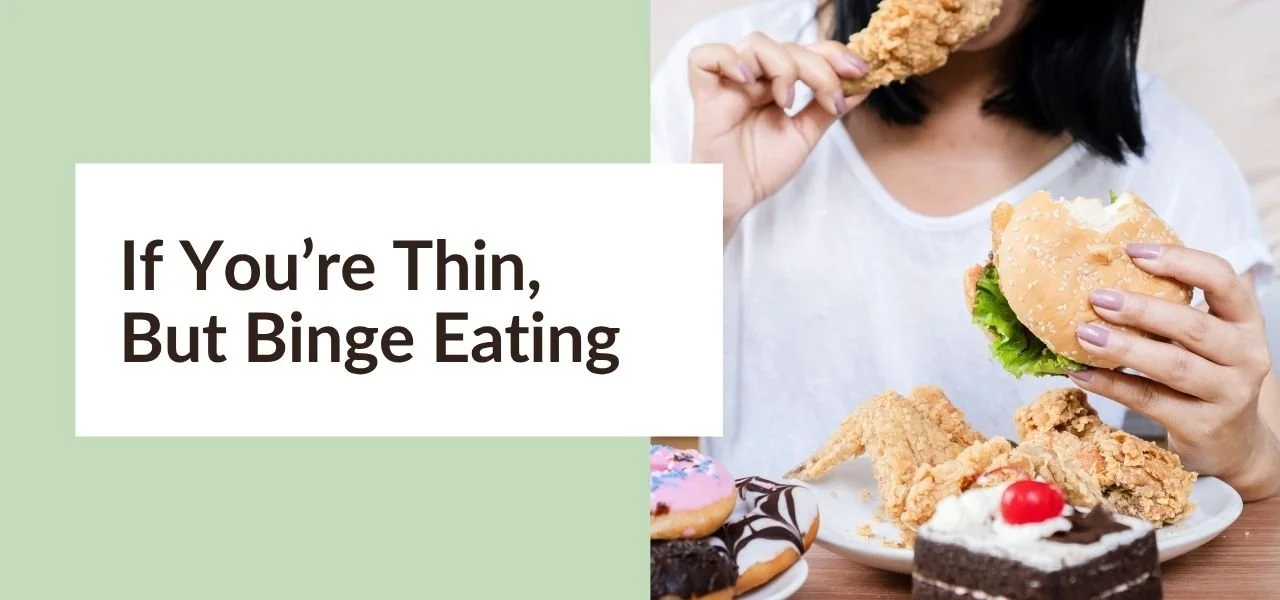
From the outside, you look healthy, fit, and at a normal weight.
People compliment how great your body looks.
And that’s what makes your struggle with binge eating so hard.
No one really knows.
And if you told them, they might not even believe you.
Today we’re talking about what it’s like if you’re at a healthy weight but still binge eating.
I’ll cover…
The unique challenges you face
Why you can binge and not gain weight
How to explain binge eating disorder to your husband so that they understand you, not dismiss you
Binge Eating But Not Gaining Weight
A lot of people assume that if you're struggling with binge eating, you're going to gain weight. While weight gain can happen after a long enough period of binge eating and overeating, it doesn't happen to everyone.
There are several reasons you might be binge eating but not gaining weight:
Your metabolism may naturally be higher.
You may be more physically active than you realize.
Genetics can affect how your body processes calories.
Your baseline calorie intake may be higher than you think.
You may be restricting after binges through skipping meals, fasting, purging, laxatives, or over-exercising.
Restriction Can Keep the Binge Eating Cycle Going
Restriction can feel like you're getting away with binge eating because you're trying to compensate afterward. But it actually keeps you stuck in the binge restrict cycle.
You may start thinking, “It doesn't matter if I binge because I can just restrict after.” That gives the binge eating habit another reason to continue.
Can You Have Binge Eating Disorder If You’re Not Gaining Weight?
Yes. Disordered eating does not have a look. You cannot determine whether someone is struggling with binge eating disorder simply by looking at their body.
Even if your weight stays the same, binge eating can still affect your mental and physical health.
You might experience:
Anxiety and constant thoughts about food
Food noise that makes it difficult to focus
Eating safe foods around other people and binge eating in secret
Shame and guilt after eating
Strong urges to binge
Bloating, heartburn, or digestive issues
Fatigue and brain fog
Poor sleep
Feeling jittery or having your heart race after a binge
Your body weight might be stable, but your relationship with food can still be causing you a lot of distress.
Why Being Thin Can Make Binge Eating Harder to Recognize
When your body looks healthy from the outside, you may use that as evidence that your eating problem “isn't that bad.”
You might think, “I'm thin, so nobody will believe me.”
This can cause you to minimize your own experience and delay getting support. You might even feel like a fraud in conversations, support groups, therapy, or articles about binge eating because you don't fit the body type you assume you're supposed to have.
But you don't need a certain number on the scale or a certain pant size to validate your struggle.
What to Do If You’re Thin But Struggling With Binge Eating
Start by trusting yourself when your brain is telling you, “Something doesn't feel normal about the way I'm eating.”
You don't have to wait until your body changes before you take your relationship with food seriously.
If you're constantly thinking about food, hiding your eating, feeling out of control around food, or promising yourself you'll never binge again, that's enough evidence that you deserve support.
Get Support for Binge Eating
The goal isn't simply to change your weight. It's to change your relationship with food so you can feel confident and in control around eating.
If you're ready to stop binge eating and learn the skills of a normal eater, that's exactly what I teach inside the Confident Eater program.

I also have a free guided audio that can help you stop a binge before it starts. It's a simple tool you can use when you notice those strong urges to binge.