November 19, 2026
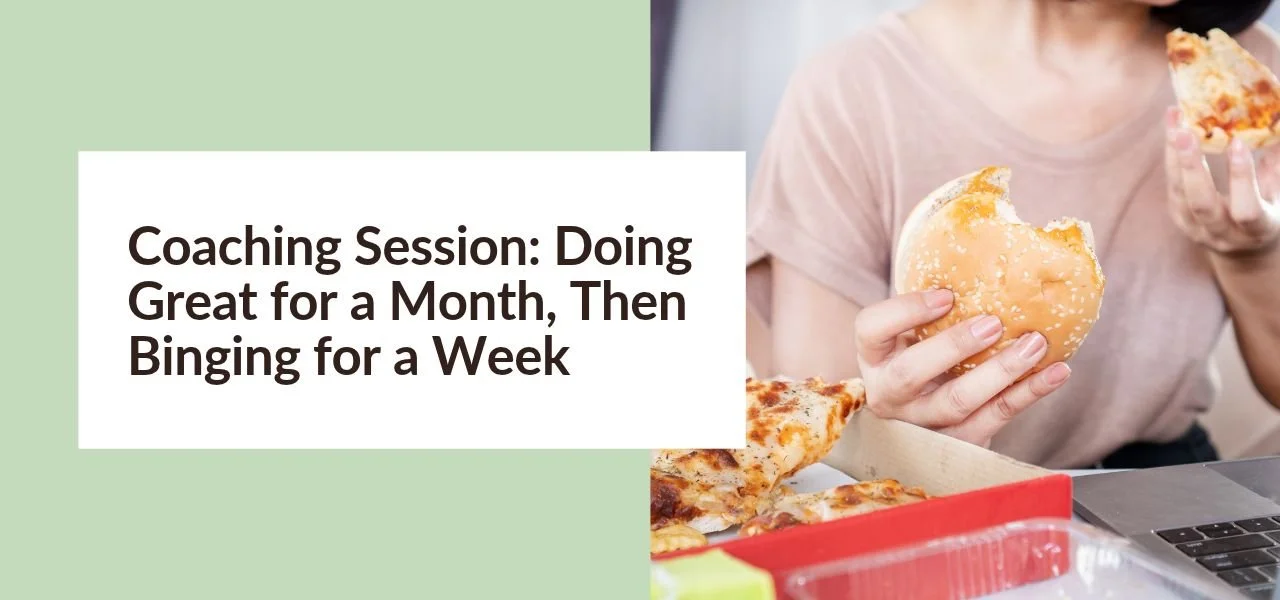
Have you ever wondered what it’s like to be coached by me? Today I’m pulling back the curtain on a real coaching session with Isa.
Isa can go weeks, sometimes longer, feeling really good around food.
Then something upsets or triggers her and she’s back to binge eating for a full week.
She knows exactly what’s happening and exactly how bad it will feel, but in the moment, she still doesn’t care.
Together we look at the day that starts the week, why knowing more doesn’t always lead to doing something different, and what helps you come back to normal eating quicker.
In this coaching session:
Why you can still be binge eating on Vyvanse (or a GLP-1)
Why knowing exactly what to do still doesn’t stop the urge, and why it feels like you just need more willpower
How shame turns one hard day into a week-long binge
The 3 parts of self-compassion from researcher Kristin Neff, and how to use them without it turning into “do whatever you want”
Why binge foods taste so good
Why You Can Still Struggle With Binge Eating on Vyvanse or GLP-1s
When Isa first started struggling with binge eating, it was happening almost every other day. Over time, she made progress and got to a point where she could go a month or even longer without binge eating.
Medication, particularly Vyvanse, had helped her a lot. But she wanted to build the skills to stop binge eating without feeling like she had to rely on medication.
This is something I see people relate to, especially with the growing use of GLP-1 medications. Medication can be a helpful tool, but you may still want to address the patterns and habits underneath your binge eating.
For Isa, the biggest challenge wasn't necessarily the everyday urges. It was what happened when something went wrong.
She could be doing well for weeks, then a specific emotional or situational trigger would come up. Suddenly, she would find herself back in the habit loop and binge eating for an entire week.
The goal wasn't just to help her manage those moments. It was to help her develop the skills to respond differently when life doesn't go according to plan.
Why Knowing What to Do Doesn't Always Stop a Binge
One of the most interesting parts of this session was Isa's awareness of her own behavior.
She knew exactly what would happen if she started binge eating. She knew she'd feel terrible, gain weight, and experience negative consequences in other areas of her life. She might cancel plans, avoid friends, fall behind on work, and spend the next week in bed getting up only to eat more food.
She wasn't unaware of the consequences. She understood them very well.
So why did she still choose to binge?
Isa explained that it felt like her values and priorities did a complete 180 in the moment. Even though she knew how bad binge eating would feel, she genuinely didn't care.
That's why the usual advice to think about the consequences or remind yourself how bad you'll feel afterward wasn't helping.
As Isa pointed out, the problem wasn't knowing that binge eating would feel bad. It was caring about those consequences enough to make a different choice in the moment.
And when you already know what to do but still aren't doing it, it's easy to assume you just need more discipline or willpower.
But having more information doesn't automatically mean you'll be able to apply it when you're struggling.
Sometimes, the more you know, the worse you feel when you can't seem to put that knowledge into action.
How Shame Can Turn One Difficult Day Into a Week of Binge Eating
To understand what was happening, we looked at Isa's most recent binge episode.
She had plans to meet up with friends the following day, but her sleep schedule had gotten off track. She had been staying up late and sleeping during the day, so when the time came to meet her friends, she was running on very little sleep.
Eventually, she canceled the plans and went back to bed.
She felt disappointed about missing out, especially knowing her friends were all meeting up and having fun. She also felt bad about not following through on her plans and isolating herself.
And then came the thought:
“What's one more bad thing to add on top of it?”
This was an important moment in the conversation.
It wasn't necessarily that Isa expected binge eating to make her feel better. She knew it would make everything worse. But she was already feeling bad about herself, and that disappointment turned into a reason to keep going.
I explained that when we don't feel like we're worth feeling good for, it becomes much harder to do something uncomfortable for our own benefit.
Think about someone you don't particularly like. You're probably not going to go out of your way to spend weeks finding them the perfect birthday present.
It's similar with ourselves. When we're feeling a lot of guilt, disappointment, and frustration, it's harder to want to do something kind or healthy for ourselves.
This is one reason shame can keep a binge going long after the original trigger has passed.
You have one difficult day, start feeling bad about yourself, and then that feeling makes it harder to interrupt the habit. Instead of getting back to your normal routine, you keep going.
The 3 Parts of Self-Compassion That Can Help You Stop the Binge Cycle
During the session, I introduced Isa to the work of researcher Kristin Neff, who has studied self-compassion and its connection to behavior change.
We're often taught that the way to change is to push ourselves harder, hustle more, and beat ourselves up when we make mistakes.
But research on self-compassion shows that treating ourselves with kindness can actually help us make better choices.
I also shared an example from an earlier episode about journaling and binge eating. In that discussion, I talked about a study where people who journaled about their eating habits and also wrote something compassionate toward themselves had better eating habits over the following two weeks than those who didn't include that compassionate reflection.
You can listen to that episode on how journaling can help with binge eating to hear more about it.
Here are the three parts of self-compassion we worked through with Isa.
1. Mindful Awareness: Notice What You're Feeling Without Judgment
The first part is mindful awareness.
Instead of trying to push away an uncomfortable feeling or immediately fix it, you allow yourself to notice what's happening.
For Isa, that meant recognizing that she felt disappointed after canceling plans with her friends.
A compassionate response might sound like:
“I'm feeling disappointed, and that's okay.”
It's safe to feel disappointed. That feeling is made up of thoughts and sensations in your body, and you can handle those sensations.
The goal isn't to pretend that you're happy or that nothing happened. It's to acknowledge what you're experiencing without adding more judgment on top of it.
2. Normalize the Experience: Remember That You're Human
The next part is normalizing what you're experiencing.
Sometimes we feel like we're the only person who struggles with certain things. We look at our behavior and think there's something wrong with us because we didn't make the choice we wish we had made.
But people have difficult moments all the time. They stay up too late, miss plans, procrastinate, scroll on social media, or do things they later wish they had handled differently.
That doesn't mean every behavior is helpful or that binge eating isn't harmful. It means you're a human being who sometimes does things you wish you hadn't.
When Isa pointed out that it was normal to feel disappointed but not normal to respond by binge eating, we looked at the distinction between the feeling and the behavior.
You can recognize that binge eating isn't what you want to do while also accepting that having a difficult day doesn't make you a failure.
A more helpful thought might be:
“Everyone has hard moments. I did something I wish I hadn't done, but I can still get back from this.”
3. Treat Yourself With Kindness Without Using Compassion as an Excuse
This was an especially important part of the conversation for Isa.
She worried that self-compassion could become another way to justify impulsive decisions.
For example, she might tell herself that staying up all night is okay because she's being compassionate toward herself. Or she might use the idea of self-acceptance to justify doing something she knows isn't helpful in the long run.
And that's a valid concern.
Self-compassion doesn't mean giving yourself permission to do whatever you want or ignoring the consequences of your choices.
It's about how you treat yourself when you're struggling or when you've made a mistake.
I explained that compassion doesn't mean saying, “I forgive you, so you can give up and do whatever your first instinct tells you to do.”
It's more like saying:
“I see you. I see that sometimes human life is hard, and I forgive you.”
You can acknowledge that you made a choice you wish you hadn't made while still caring enough about yourself to make a different choice next.
The goal is to release the pressure and self-loathing that can keep you stuck, not to give up on yourself.
Why Binge Foods Taste So Good (And Why That's Not Your Fault)
Another important moment in the session came when Isa brought up something she felt ashamed to admit.
Even though she knew binge eating would make her feel terrible, she couldn't deny that the food itself tasted delicious.
She worried that enjoying binge foods meant there was something wrong with her, especially when those foods were part of something she knew was hurting her.
But here's what I explained to her.
Most people aren't binge eating roasted broccoli and chicken. They're usually reaching for highly processed foods that are designed to make us want more.
These foods can make your brain think you're eating something nutritious and satisfying when you're not necessarily getting the nutrients your body needs.
There are scientists and major food companies investing significant amounts of money into creating foods that taste incredibly good and encourage us to keep eating.
So when you eat something and your brain says, “That was really good. You should eat more,” that doesn't mean there's something wrong with you.
Even people who don't struggle with binge eating can experience those cravings. The difference is that they may respond to them differently, or the desire to eat more doesn't turn into a binge.
I also explained that I go much deeper into the difference between real and fake foods inside the Confident Eater program.
The important thing I wanted Isa to take away was to stop blaming herself for enjoying the taste of food that was intentionally designed to be appealing.
You can understand why something tastes so good without turning that enjoyment into another reason to feel ashamed.
How Self-Compassion Can Help You Get Back to Normal Eating Faster
Toward the end of the session, we came back to what Isa had noticed about herself.
She had previously been with friends, felt an urge to binge, and managed to stop herself. She stepped away from the food for a moment, went to the bathroom, and reminded herself:
“This isn't you. You don't want this.”
She described how the version of herself who didn't want to binge seemed to come back. She felt a rush of pride and a sense of calm and peace.
We used that moment for a visualization exercise.
I guided Isa through imagining that experience again, reconnecting with the version of herself who knew what she truly wanted and cared about her future.
Then we imagined a future situation where she might feel disappointed or ashamed after something didn't go according to plan.
Instead of letting those feelings take over, she practiced bringing that same sense of calm and pride into the moment.
The idea was to help her remember that she could reconnect with the part of herself that wanted to feel good, show up for her friends, and enjoy her life.
When we talked about what she wanted to take away from the session, Isa said that the connection between self-compassion and making better choices had finally clicked.
When she wasn't in such a self-loathing state, she could see how much easier it was to make choices that supported her.
And that's the important distinction.
Self-compassion isn't about giving up on yourself. It's about getting out of the cycle of beating yourself up so you can actually take care of yourself.
Even if you don't feel ready to love yourself, sometimes it helps to start with something simpler:
“I'm a human, and I'm going to take care of my human self today.”
You don't have to turn one difficult day into a week-long binge. You can acknowledge what happened, treat yourself with compassion, and start making a different choice right now.
Want Help Breaking Your Own Binge Eating Cycle?
If you related to Isa's experience, especially knowing what to do but still feeling like you can't stop, I want you to know that this isn't simply a willpower problem.
What you heard today was one real coaching session. Inside the Confident Eater program, you'll get this kind of support every week, along with text support for those moments in between when you have a slip-up and need someone there to help you work through it.
You don't have to keep piecing together random advice or trying to figure everything out on your own.
If you're ready to work on the patterns underneath your binge eating and build a different relationship with food, I'd love to help.
Book a free consultation call and we'll talk through where you're at, where you want to be, and whether working together makes sense.
Want a Chance to Be Coached on the Podcast?
Isa volunteered to share her experience in this real coaching session, and I'm planning to do more episodes like this every couple of months.
If you'd like a chance to receive free coaching with me and have your own session featured, apply here.