November 12, 2026
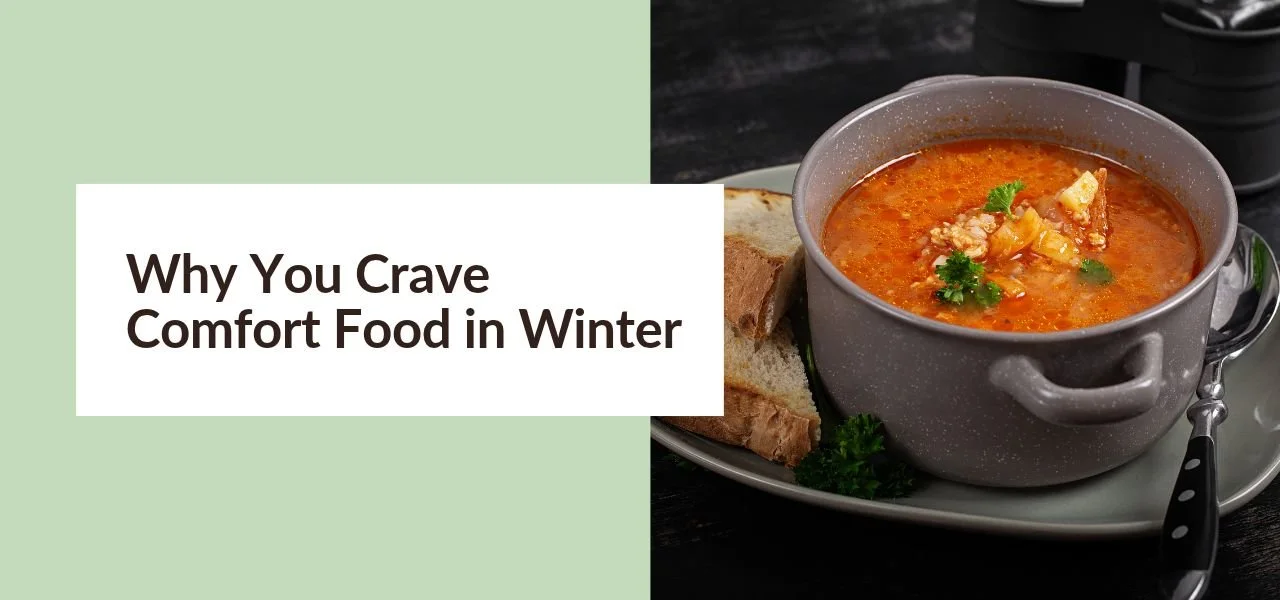
Why do I eat so much in winter? How do I stop comfort eating? If you’re under a blanket with the cookies and the leftover mac and cheese the second it gets cold and dark, this episode is for you.
You’ll learn…
Why you feel more hungry in winter
The psychology behind comfort food
Why you gain weight more easily in winter
Healthy alternatives to comfort eating in winter
How to stop craving sugary foods in winter
It's getting dark earlier, it's cold outside, and after a long day at work, you might already be under a blanket with cookies or leftover mac and cheese. It feels like there's nothing else you need to do for the rest of the night, so why not eat a little more? It's the holidays, after all. You can always get back on track in the new year.
But here's something that might surprise you: comfort eating isn't always comforting.
You might feel good for the first few bites, but when you finish eating, you're left feeling overly full, uncomfortable, low on energy, or guilty. And when it turns into overeating or binge eating, it can leave you feeling even worse.
f you've been wondering how to control hunger in winter, the answer isn't necessarily to eat less or fight your cravings. It's about understanding what your body needs and recognizing when you're turning to food for emotional comfort.
In this episode, I'm breaking down why winter cravings tend to feel stronger, the psychology behind comfort food, and the one word I want you to start using instead of comfort eating. Once you hear it, you might never look at that blanket-and-cookies moment the same way again.
We'll also talk about how to meet your body's need for warmth, energy, and rest without turning to food to numb your emotions.
How to Control Hunger in Winter and Understand Your Cravings
There are some biological reasons you might crave warmer, heavier, or more carbohydrate-rich foods during the winter. And the first thing I want you to know is that wanting warm, nourishing food in winter is completely normal.
Different foods contain different nutrients, so wanting more variety throughout the year can be part of how your body gets what it needs.
Warm foods can also raise your body temperature slightly. So it makes sense that you might not feel like eating a cold salad or the same foods you enjoyed during the summer.
The problem is when you interpret these cravings as a sign that something is wrong with you.
Instead of recognizing that your body might be asking for warmth, energy, and rest, you start fighting those needs. You try to force yourself to eat the same meals you were eating in the summer, even when they don't sound appealing.
I want you to look at what's happening underneath those cravings.
Your body may be asking for something different, and you can intentionally meet those needs without restricting yourself or feeling like you've done something wrong.
Learning how to control hunger in winter doesn't mean ignoring your body's signals or forcing yourself to eat less. It means understanding what your body needs and recognizing when you're reaching for food because of an emotional need rather than physical hunger.
The Psychology Behind Comfort Food
Biology is only one part of the picture. There's also a lot of psychology behind why we associate certain foods with comfort.
How Food Marketing Teaches You to Associate Food With Comfort
Think about how food is advertised during the holidays.
You see snow falling, a cozy family gathered around a table, and a tray of cookies or a warm drink at the center. The food becomes a symbol of warmth, togetherness, and belonging.
You're not just being sold a cookie. You're being sold the feeling you think that cookie will give you.
Food companies know how powerful emotions are in marketing. They want you to associate their products with comfort, joy, and family memories.
Even the words on food packaging are intentional. Think about labels like:
Homestyle
Grandma's
Comfort classics
Indulgent
These words are chosen to make a packaged food feel like a hug. After seeing thousands of these messages, it's no surprise that your brain starts thinking, "This is comforting," whenever you're stressed or looking for something to make you feel better.
But here's the good news: you learned to associate food with comfort, which means you can also unlearn that association.
How Childhood Experiences Shape Your Relationship With Comfort Food
Our experiences growing up can also teach us to associate food with certain feelings.
Maybe you fell off your bike as a child and someone handed you a popsicle to make you feel better. You started associating that sweet raspberry flavor with being soothed.
Maybe food was used as a reward, a celebration, or a way to make difficult moments feel better.
Over time, these experiences can create an automatic connection between food and comfort.
Sometimes, eating those foods really does feel comforting for the first few bites. But the problem is that the actual need for comfort might still be there after you've finished eating.
The only thing food can solve is hunger.
If you're feeling lonely, bored, stressed, or overwhelmed, food can't resolve the emotion because that emotion wasn't caused by a lack of food in the first place.
And after a binge, you're left dealing with the original emotion, plus the guilt and shame that may come with overeating.
Sometimes, binge eating can even become a way to avoid dealing with emotions altogether. The binge takes up so much of your time, energy, and mental space that you don't have to sit with what you're actually feeling.
Why You Turn to Food to Numb Your Emotions
If sitting with uncomfortable emotions feels difficult, it's understandable that you might want to escape them with food.
Most of us aren't taught how to experience emotions or understand what's happening when we feel bored, lonely, or stressed.
You might hear advice to go for a walk, call a friend, or take a bubble bath whenever you're upset. Those things can be helpful, but they don't necessarily address why you're experiencing the emotion in the first place.
Your thoughts create your emotions. So if you want to change the emotional patterns that lead you to food, you need to understand the thoughts underneath them and learn how to sit with the physical sensations of those emotions.
This is something I teach inside the Confident Eater Program. I help clients learn how to allow emotions so they can feel safe experiencing boredom, stress, or loneliness without automatically reaching for food to numb those feelings.

Because many of these patterns are deeply ingrained and happen unconsciously, simply knowing why you turn to food isn't always enough to change the behavior.
That's why I also work with the unconscious brain in my coaching sessions to help clients rewire those learned beliefs that food equals comfort.
Why You Might Gain Weight More Easily in Winter
Another question that comes up around this time of year is why you might notice your weight changing during the winter.
There are a few things to understand here.
Your Weight Can Naturally Fluctuate Throughout the Year
Historically, our bodies didn't have steady access to food all year round. There were periods when food was more readily available and times when it wasn't.
Having a little more body fat during colder months could have been beneficial for warmth and energy.
And while our lives look very different today, it's still normal for your weight to fluctuate a couple of pounds throughout the year.
The important thing is not to panic when you notice a small change.
So many people see the scale go up and immediately think everything is going wrong. They decide they need to cut back, restrict their food, or start a new diet.
But if you're learning to eat normally and your weight fluctuates a little throughout the winter, that doesn't automatically mean you need to do anything about it.
Your body doesn't need to stay exactly the same every single month.
The Last Supper Mentality Can Make Winter Binge Eating Worse
There's another factor that can have a much bigger impact on your eating habits: the last supper mentality.
You tell yourself:
"It's the holidays, so I'll be good after."
"I'm just going to enjoy these cookies one more time."
"I'll get back on track in January."
When you give yourself permission to eat all the holiday foods now because you plan to restrict later, it can create a sense of urgency.
You start treating these foods like they're your last chance to enjoy them before they disappear from your life again.
And when January comes, you try to cut back or return to your diet. That restriction can lead to more cravings, overeating, and eventually another binge.
It's not always the winter itself causing the problem. Sometimes, it's the restrict-binge cycle that the winter season creates.
You might move less and get less daylight during the colder months, and those can be factors too. But I often see the cycle of last-chance eating followed by restriction playing a much bigger role.
Why You Don't Need to Wait Until January to Change Your Eating Habits
I want you to take restriction off the table right now.
When you stop telling yourself that you'll have to give up these foods in January, you remove some of the urgency to eat everything now.
Instead, continue eating normally to the best of your ability. You don't need a start date for when you'll get back on track.
If you're already eating normally day to day, there is no getting back on track.
And the holidays can actually be a great time to work on your eating habits. Imagine going through one of the hardest times of the year without binge eating. Think about how much confidence you could carry into January knowing that you can handle whatever comes up.
What to Do Instead of Comfort Eating in Winter
So if food isn't the answer when you're looking for emotional comfort, what can you do instead?
First, I want you to recognize that there are healthy ways to enjoy comforting food during the winter.
Choose Warm, Nourishing Foods That Actually Feel Comforting
Remember, there's a biological reason you might want warm foods and more variety during colder months.
You can absolutely enjoy comfort food. The difference is choosing food that nourishes you and meets your body's needs, rather than using food to numb an emotion.
Some ideas include:
A warm bean soup or hearty chili
A baked potato bar
Roasted vegetables with a warm grain
Oatmeal with fruit and nuts
A slow cooker stew
These meals can give you that warmth and comfort you're looking for while leaving you feeling good afterward.
What to Do About Sugar Cravings in Winter
If you're experiencing more sugar cravings during the holidays, remember what we talked about earlier.
A lot of the way we think about sugary foods comes from how they're marketed to us and the associations we've learned over time.
It's okay to eat sugar and include sweet foods in your life. You don't need to make them forbidden.
But it's also helpful to question the thought that a sugary treat is going to provide the comfort you're looking for.
Think about how you actually feel after eating a lot of those foods. If you've eaten 20 cookies and you're left feeling bloated, uncomfortable, and guilty, was that really comforting?
This brings me to the one word I want you to start using differently.
Stop Calling It Comfort Eating and Start Calling It Discomfort Eating
I want you to start calling it discomfort eating when you're eating food that leaves you feeling uncomfortable.
You're not having a warm bowl of bean stew that nourishes you and leaves you satisfied. You're eating a large amount of food because you believe it's going to make you feel better, but afterward, you're left with physical and emotional discomfort.
The stomachache, guilt, hiding, and shame that can come with binge eating aren't comfort.
So the next time you catch yourself thinking, "I want to comfort eat right now," try changing that thought to:
"I want to discomfort eat."
That small shift can help you pause and recognize what's actually happening instead of automatically following the thought that food will make everything better.
What Does True Comfort Mean to You?
Here's a coaching question I want you to take with you:
What does true comfort mean to me, and how do I know when I've actually been comforted?
You can even use this as a journal prompt.
Think about what you notice in your body when you feel genuinely comforted.
Maybe it's:
Snuggling up under a warm blanket
Taking a relaxing Epsom salt bath
Getting into your fuzzy pajamas and going to bed early
Calling a friend
Having a slow morning without rushing
These are all things that can leave you feeling comforted afterward, rather than sluggish, bloated, or ashamed.
Winter is a time for slowing down and resting. And you deserve to give yourself permission to do that.
Sometimes, we think we're not allowed to rest. So instead of actually slowing down, we turn to food because eating gives us a reason to stop for a while.
But rest doesn't have to come through binge eating.
In the episode, I also mention the book Wintering, which explores the importance of seasonal cycles and allowing ourselves to slow down. Just like nature has periods of growth and rest, we don't need to be going, expanding, and producing every single day of the year.
You can give yourself permission to rest without using food to escape.
Remember, Binge Eating Isn't Comforting
If there's one thing I want you to take away from this episode, it's that binge eating doesn't actually give you the comfort you're looking for.
It might seem comforting in the moment, but the physical discomfort, guilt, hiding, and shame that follow are not what you truly need.
So the next time you find yourself under a blanket with cookies, ask yourself what you're really looking for.
Are you hungry? Do you need warmth? Are you tired and ready to rest? Are you feeling lonely or stressed?
You can meet those needs without restricting yourself or using food to numb your emotions.
And if sugar cravings are something you struggle with, I have a free guide that can help you understand what's happening.
Get My Free Guide: Why One Cookie Turns Into Five
If you find that one cookie often turns into five, or that you struggle to stop eating sugar once you start, grab my free guide!
I'll walk you through the three secret reasons you can't stop binge eating sugar once you start, so you can better understand what's driving those cravings.