November 5, 2026
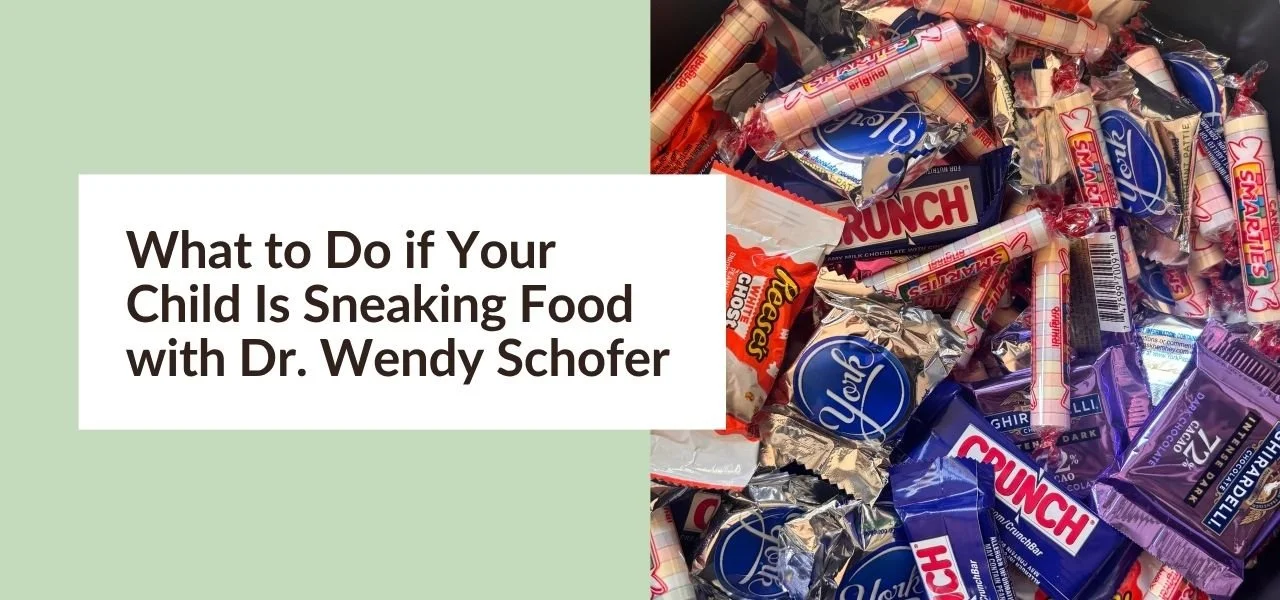
Is your kid sneaking candy, hiding wrappers, or refusing the healthy meals you work so hard to make?
Do you worry about your child’s weight, or about passing your own food struggles down to them?
This episode is for you.
Today I’m joined by Dr. Wendy Schofer, MD who is a dual-board certified pediatrician and lifestyle physician, and trauma-informed parenting coach specializing in eating disorder prevention for family members of all ages and sizes.
As Founder of Family in Focus®, she's on a mission to help 1 million families build the social-emotional skills that strengthen relationships with food, body, and especially each other.
You’ll learn:
Why your child sneaks food and what makes it worse
How to handle Halloween candy and the holidays without bargaining and power struggles
What to do if you’re concerned about your child’s weight or eating habits
What growth charts and weight percentiles mean, and what they don’t tell you
How to help your kids’ relationship with food when you’re still healing your own
Why Is Your Child Sneaking Food?
One of the biggest concerns parents bring to Dr. Wendy is that their children are sneaking food, hiding candy wrappers, or refusing the healthy meals they're preparing.
Parents might say:
"I've been putting so much effort into making healthy meals for my child, and they refuse to eat them. I'm throwing all this food away. I'm wasting money and time, and then they're just going to the pantry. I'm finding candy wrappers underneath the bed, and it's so infuriating."
It's easy to feel like you're failing your child, especially when you're trying so hard to help them develop healthy eating habits.
But Dr. Wendy shares something important: No parent is failing.
In her own pediatric practice, she noticed that concerns about children's eating habits, nutrition, and growth were becoming the primary reason families came to see her.
Initially, she tried giving parents the tools she'd been trained to provide. She offered guidance on nutrition, portions, and physical activity.
But families kept coming back and explaining that those recommendations weren't working.
They were still dealing with food battles at home, and many parents were also struggling with their own relationship with food.
Dr. Wendy realized she needed to take a different approach. She wasn't meeting families where they were, and she needed to understand what was happening beyond the food itself.
She was also experiencing many of these same struggles in her own home.
What to Do When Your Child Is Sneaking Food: Start With Curiosity
When parents discover hidden candy wrappers or notice their child eating foods they don't want them to eat, their first instinct is often to take action.
Maybe they want to lock up the candy, remove certain foods from the house, or teach their child about moderation.
Other people might suggest giving children completely free access to all foods.
But Dr. Wendy believes we need to slow down before jumping into any of these solutions.
Instead of immediately changing access to food or focusing on what your child is eating, she encourages parents to get curious about what's happening behind the scenes.
The candy wrappers are what you're seeing. But you don't necessarily know what's going on in your child's life that might be contributing to their eating habits.
What else might they be experiencing?
Are they dealing with social pressure? Are they feeling left out? Have they been shamed about their body or weight? Are there other things happening that you haven't considered?
Dr. Wendy explains that getting curious isn't about interrogating your child or asking them a hundred questions.
It's not about swooping in and demanding to know:
"What's going on? What are you feeling right now? Are you really hungry?"
It's about slowing down and allowing yourself to wonder what your child might be experiencing.
That shift can make a big difference in how you approach the situation.
Look Beyond the Food and Consider What's Happening in Your Child's Life
Amber shares an example of a client who was worried about how her children would handle Halloween candy.
They realized that it was important to consider more than just how much candy the children were eating.
For example, had they been excluded from their friend group? Were they experiencing body or weight-related shame? Were they feeling pressure to look a certain way?
Amber also mentions a teenage client who was experiencing social pressure because her friends were dieting and trying to look a certain way for their Halloween outfits.
These are important things to consider because children and teenagers are exposed to so many messages about what health should look like.
Dr. Wendy points out that it's incredibly hard to be a child or teenager today. They're constantly receiving messages about health, food, body image, and appearance.
And as adults, we need to consider the messages we're sharing, too.
What do we communicate about what it means to be healthy? What do our children hear when we talk about our bodies, food, or our own eating habits?
Sometimes, the most important place to start is by looking at what we're modeling ourselves.
How to Help Your Child Build a Healthy Relationship With Candy
One of the biggest challenges for parents is figuring out how to approach candy and other treat foods, especially around holidays.
Halloween, Thanksgiving, Christmas, and other celebrations can bring up a lot of anxiety for parents who are worried about their children's eating habits.
But Dr. Wendy encourages parents to think about something beyond the food.
Instead of focusing entirely on how much candy your child can eat, ask yourself:
What do you want your family to celebrate, and what do you want that experience to be about?
Make Holidays About More Than Food
Dr. Wendy shares how her family started shifting the focus of Halloween.
Instead of making the night all about how much candy the children could fit into their pillowcases, they started focusing more on the characters, costumes, and play.
It wasn't about taking candy away or trying to distract the children from it.
It was about recognizing that Halloween could be about so many other things, too.
As her children got older, it became an opportunity to play, dress up, and explore different possibilities.
The same idea applies to Thanksgiving.
Yes, there's usually a big meal, but what else is Thanksgiving about for your family?
Maybe it's about bringing family members together from far away, practicing gratitude, or spending time with people you love.
Dr. Wendy explains that we don't have to take away the food or pretend it isn't part of the celebration. We can simply bring more attention to everything else that's happening.
Both things can be true.
There can be amazing food, and there can also be meaningful experiences that have nothing to do with food.
Teach Children to Notice How Food Makes Them Feel
Amber also shares a conversation with her client about the reasons they might say no to Halloween candy.
In the past, her client had heard messages from her own mother about her belly getting bigger or not being able to control herself around candy.
Those messages were based on external factors, particularly appearance and weight.
They started exploring a different way of making food choices by focusing on internal experiences.
For example:
Maybe you don't want more candy because it gives you a stomachache.
Maybe you notice that eating certain foods affects how you sleep.
Maybe you simply don't feel like eating more right now.
These are very different reasons for making a choice around food.
They allow children to start noticing how food feels in their bodies instead of learning to make decisions based on fear, shame, or how they think their bodies should look.
And, as Amber points out, sometimes we just want the candy!
Food can be part of celebration, happiness, and joy. Emotional eating isn't always about feeling bad and turning to food. Sometimes, we're feeling amazing, and food is part of that experience.
How Improv Comedy Can Help Parents Create Change Without Shame
One of the most interesting parts of this conversation is Dr. Wendy's use of improv comedy concepts in her work with families.
She explains that improv comedy isn't necessarily about being funny or telling jokes. It's about learning to be present, adapt, and make things up as you go.
There isn't always a set script.
And that's a helpful way to think about family relationships, too.
Parents often feel pressure to find the right words, make the right decisions, and know exactly what to do in every situation.
But real life doesn't work that way.
Dr. Wendy shares a few improv principles that she brings into her work with families.
1. Make Your Partner Look Good
One of the main rules of improv comedy is to make your partner look good.
Whatever your partner brings into a scene, you try to understand where they're coming from and build on it.
Dr. Wendy applies this idea to parenting.
Children are constantly trying things, making decisions, and figuring things out. Sometimes, they make choices that parents wouldn't necessarily recommend.
But instead of immediately judging or correcting them, parents can try to understand why that choice made sense to the child in that moment.
It doesn't mean you have to agree with the decision or encourage them to do it again.
It means showing compassion and recognizing that your child was doing the best they could with what they had in that moment.
That understanding can help build connection.
2. Use the "Yes, And" Approach
Another important improv principle is "Yes, and."
In improv, you don't argue with what's happening in the scene. You accept that it exists and build from there.
Dr. Wendy uses this idea in family interactions.
Instead of spending all your energy arguing about what happened, you can acknowledge the situation and consider how you want to respond.
For example, she shares a story about coming home from a trip and finding empty alcohol bottles in her house.
Her initial reaction could have been to get angry, demand answers, or start arguing.
Instead, she lined up the bottles on the counter and asked her children, "Tell me about what happened here. I would love to know what's going on."
She didn't ignore what she found. She acknowledged it and created an opportunity to have a conversation.
Her goal was to maintain her relationship with her children and understand what had happened.
This is what the "Yes, and" approach can look like in everyday life.
You can acknowledge what's happening without immediately reacting with anger or judgment. Then you can decide how to build connection and work through the situation together.
How to Talk to Your Child About Their Weight
Another important topic parents often struggle with is their child's weight.
What happens when you're concerned about your child's weight or their pediatrician brings up something about their growth?
Dr. Wendy explains that there's a lot of nuance involved in these conversations.
As pediatricians, monitoring a child's growth over time is important. Doctors look at things like height, weight, and head circumference during the early years.
Growth charts can help show how a child is growing compared to a population of children of a similar age and sex.
However, the problem comes when we start treating those numbers as goals that every child should reach.
Growth Chart Percentiles Don't Tell the Whole Story
Dr. Wendy explains that growth charts show a distribution across a population. They don't tell you everything about an individual child's health.
A number on a growth chart doesn't tell you what's happening on the inside, what habits a child has, or how they're feeling.
For example, a child being at the 60th percentile doesn't mean something is wrong.
It also doesn't mean that being at the 50th percentile is somehow better.
Dr. Wendy uses the example of the 85th percentile. If we're looking at a group of 100 children of a similar age, the 15 children above the 85th percentile would fall into the overweight category based on that measurement.
But that number alone doesn't tell us whether there's a problem.
Instead of immediately focusing on the percentile, she encourages parents to look at the bigger picture.
What has been happening over time? What habits are being practiced? What does the child's overall environment look like?
And just as importantly, what meaning are we giving to that number?
Be Careful About the Messages Children Receive About Their Bodies
When parents put too much focus on a number or a weight category, children can start absorbing the idea that something is wrong with their bodies.
They might begin to think that their size is something bad or something they need to change.
Dr. Wendy encourages parents to support children from the inside out.
That means looking beyond weight and considering how we're building their self-esteem, sense of belonging, and self-worth.
Weight is one number, but it isn't the whole story.
As she explains through the improv concept of "Yes, and," we can acknowledge that the number exists while also asking what else we need to understand.
What If You're Worried About Your Child's Eating Habits or Weight?
Dr. Wendy wants parents to know that if they're concerned about their child's weight or eating habits, they are not alone.
There are so many messages telling parents that they need to work harder, do more, or take responsibility for every outcome related to their children's health.
And that can create a lot of stress.
Parents want their children to be happy and healthy. They want to protect them and help them make good choices.
But Dr. Wendy's message is important:
You are not alone, and you have not done anything wrong.
We need support and connection to create changes that benefit both parents and children.
Rather than approaching every food-related concern as something that needs to be fixed immediately, we can slow down, get curious, and work toward building a stronger relationship with our children.
Where to Find Dr. Wendy Schofer
If you're a parent concerned about your child's eating habits, weight, or relationship with food, Dr. Wendy has several resources available to help.
You can learn more about her work through:
Her course, No More Candy Wrappers Under the Bed, helps parents address food-related struggles without making everything about restriction, shame, or battles for control.
You can explore her resources and learn more about the support she offers on her website.
Final Thoughts: Build Connection Before Trying to Change Your Child's Eating Habits
If there's one thing to take away from this conversation, it's that the food is often only one part of the story.
When your child is sneaking food, hiding wrappers, or refusing meals, it's understandable to want to fix the situation right away.
But before changing the food in your home or trying to control what your child eats, take a moment to slow down and get curious.
What's happening in their life? What messages are they receiving about food and their bodies? What might they be experiencing that you haven't considered?
You don't have to have all the answers or follow a perfect parenting script.
You can start by listening, showing compassion, and building a connection with your child.
And remember, both things can be true. You can have concerns about your child's eating habits while also creating a home where food isn't surrounded by shame, fear, or restriction.
Want to Learn More About Your Child’s Relationship With Food?
If this episode got you thinking about your child’s eating habits and how to help them feel more confident and in control around food, I also want to share a free resource with you.
Grab my free guided audio to stop a binge before it starts. This proven seven-minute meditation has helped thousands of people interrupt a binge and get back in control.